


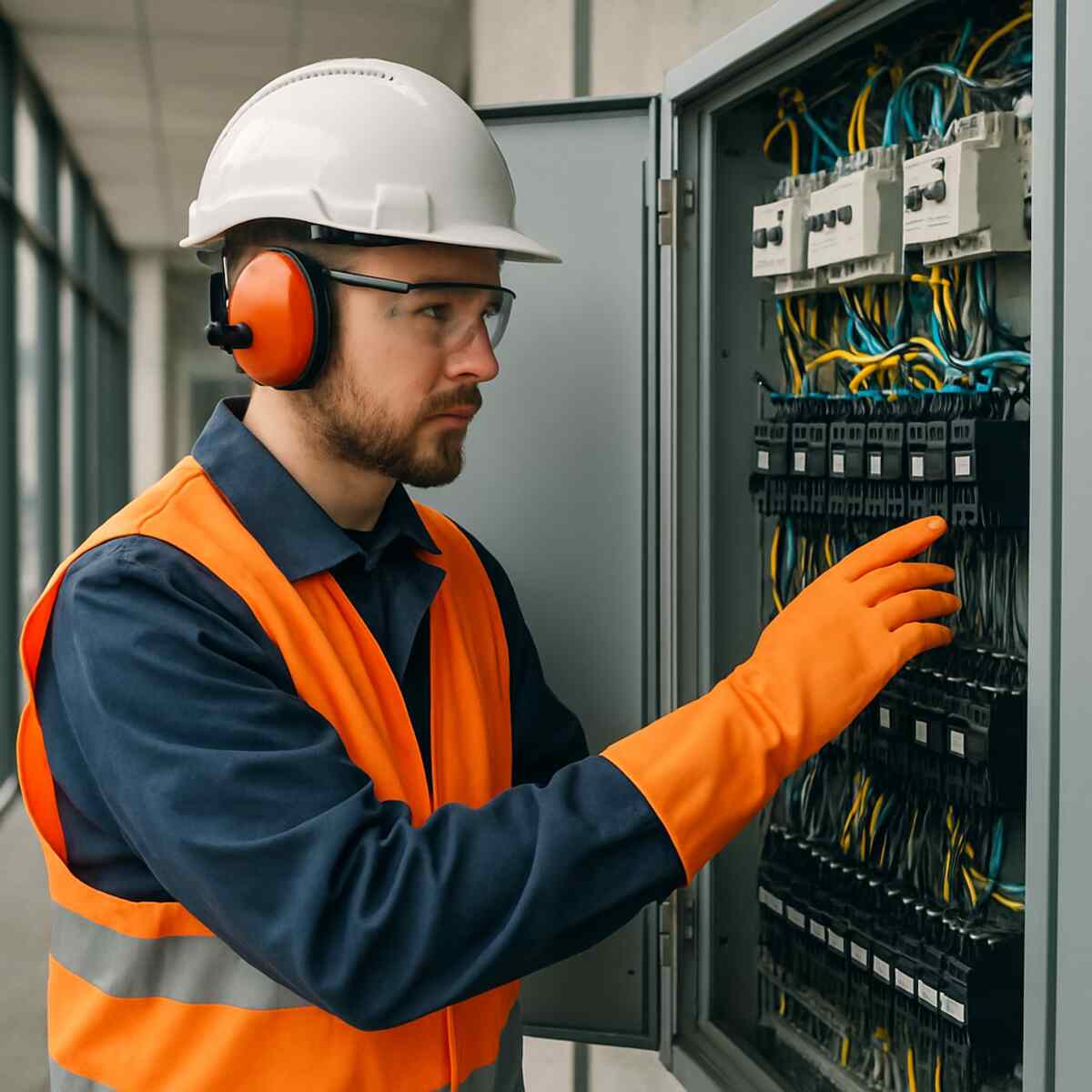
Behind the walls and above the ceilings of every successful business, retail store, and corporate high-rise lies a complex, invisible nervous system. This intricate web of wires, panels, conduits, and data cables keeps operations running smoothly, safely, and efficiently. The architects of this vital infrastructure are none other than skilled commercial electricians. Select the best electrical panel upgrade Highlands Ranch.
A commercial electrician is far more than a tradesperson who simply connects wires. Today’s professionals are highly trained technicians, problem solvers, and safety experts who must navigate strict building codes, manage high-voltage systems, and adapt to rapidly evolving green technologies. Whether they are powering a newly constructed office complex or breathing modern life into an aging historical building, their skill set must be incredibly diverse and sharply honed.
If you are a facility manager looking to understand the technical requirements of your building, a business owner planning an expansion, or an aspiring tradesperson charting your career path, understanding these competencies is crucial. In this comprehensive guide, we will explore the essential skills, technical knowledge, and industry expertise every successful commercial electrician must possess to thrive in today’s demanding electrical landscape.
Understanding the Foundation: What is a Commercial Electrician?
To appreciate the skills required for the job, one must first understand exactly what the role entails. A commercial electrician specializes in the installation, repair, and maintenance of electrical systems in commercial buildings. These include retail stores, restaurants, office buildings, hospitals, schools, and other public spaces.
While the fundamental principles of electricity remain the same across all environments, the application, scale, and safety requirements vary drastically depending on the setting.
The Difference Between Residential and Commercial Electrical Work
It is a common misconception that an electrician who wires a house can seamlessly transition to wiring a shopping mall. The difference between residential and commercial electrical work is profound, encompassing everything from the materials used to the physical demands of the job.
- Wiring Methods: Residential wiring typically relies on non-metallic (NM) sheathed cables (often referred to as Romex) hidden behind drywall. Commercial electrical work almost exclusively requires wires to be pulled through metal or PVC conduits. This provides enhanced protection against physical damage and fire hazards in high-traffic public buildings.
- Power Loads: Homes generally require a standard 120/240-volt single-phase power supply. Commercial buildings demand significantly more power to run heavy HVAC systems, large-scale lighting, and specialized equipment, often requiring multi-phase systems.
- Accessibility: In residential settings, wires are usually tucked away permanently. In commercial environments, electricians frequently utilize drop ceilings, raised floors, and accessible conduit systems because businesses constantly reconfigure their layouts and upgrade their technology.
Commercial vs. Industrial Electrician: Where is the Line?
While the terms are sometimes used interchangeably, a commercial electrician and an industrial electrician operate in slightly different spheres.
An industrial electrician typically works in manufacturing plants, factories, and heavy industrial facilities. Their work revolves around ultra-high-voltage systems, massive generators, robotics, programmable logic controllers (PLCs), and complex conveyor systems. However, a top-tier commercial electrician must possess a baseline understanding of these systems, as many large commercial facilities (like hospitals or massive data centers) blur the lines between commercial and industrial power requirements.
Core Technical Skills Every Commercial Electrician Must Master
The daily tasks of a commercial electrician require a deep well of technical knowledge. A slight miscalculation or a misunderstood diagram can result in thousands of dollars in equipment damage, severe business downtime, or catastrophic fire hazards.
Three-Phase Power vs Single-Phase Systems
One of the most critical foundational skills is a masterful understanding of three-phase power vs single-phase systems.
Most residential homes run on single-phase power, which operates on a single alternating current (AC) waveform. It is perfectly sufficient for lighting, televisions, and basic household appliances. However, single-phase power experiences brief moments where the voltage drops to zero during its cycle, which can cause heavy commercial machinery to stutter or run inefficiently.
Commercial spaces rely heavily on three-phase power.
- How it works: Three-phase power utilizes three separate alternating currents, offset by 120 degrees. This ensures that the power delivery is continuous; as one current drops, another is peaking.
- The benefits: This continuous flow of electricity allows large commercial motors, heavy-duty HVAC rooftop units, and industrial-grade kitchen equipment to operate smoothly and with greater energy efficiency.
- The electrician’s role: A commercial electrician must know how to balance loads across all three phases. If a panel is unbalanced, it can lead to overheated neutral wires, tripped breakers, and premature equipment failure.
National Electrical Code Compliance for Businesses
Electricity is inherently dangerous, which is why the National Fire Protection Association (NFPA) updates the National Electrical Code (NEC) every three years. Mastering National Electrical Code compliance for businesses is non-negotiable.
Commercial properties are subject to rigorous inspections by local authorities having jurisdiction (AHJs). A commercial electrician must know the code inside and out to ensure that every conduit bent, every panel installed, and every wire pulled meets legal standards.
- Liability: Non-compliance can result in severe fines, denied insurance claims in the event of a fire, or the forced closure of a business until violations are rectified.
- Calculations: Electricians must use NEC tables to calculate conduit fill (how many wires can safely fit in a pipe without overheating), voltage drop over long distances, and proper grounding and bonding techniques.
- Local Amendments: A skilled professional also knows that local municipalities often have their own amendments to the NEC, requiring an even stricter standard for commercial installations.
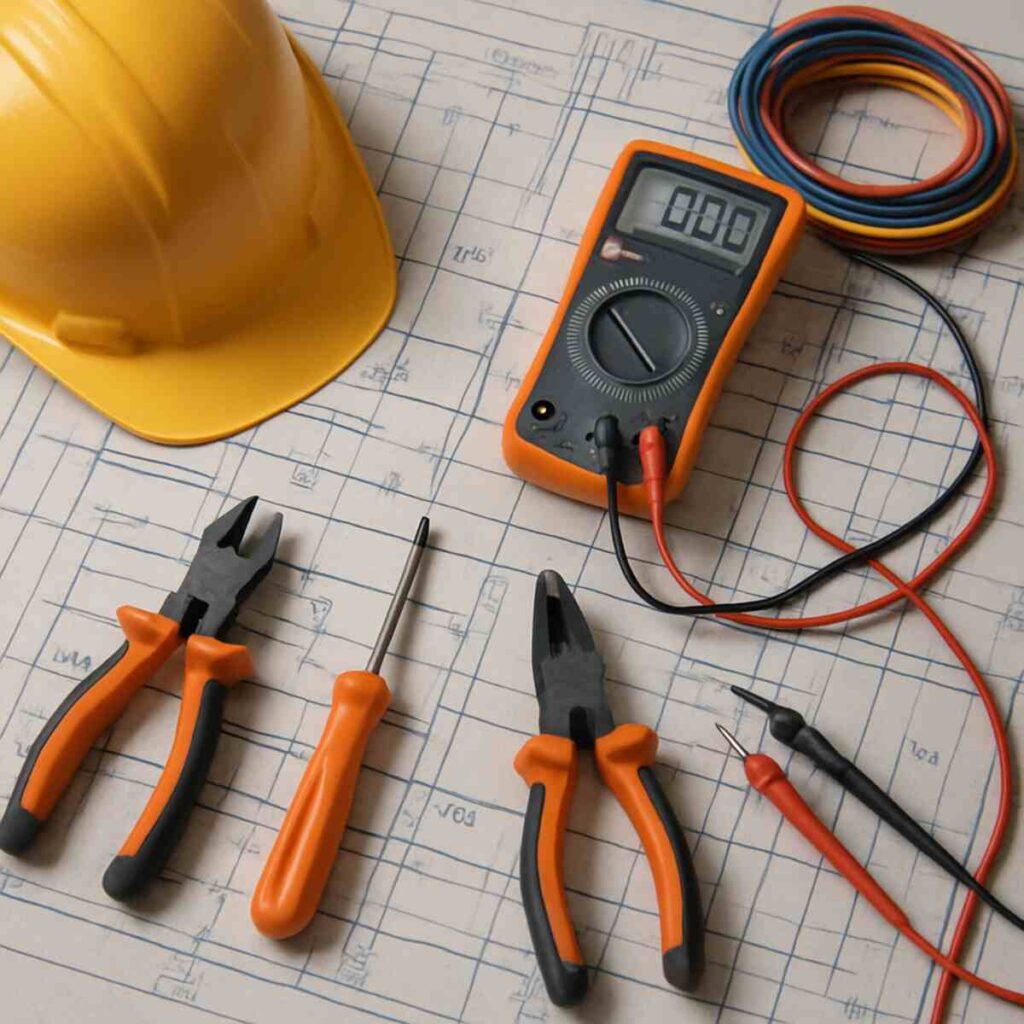
Reading Blueprints and Technical Diagrams
Commercial construction sites are chaotic orchestras of various trades working simultaneously. The sheet music for this orchestra is the architectural blueprint.
Commercial electricians must be highly proficient in reading complex electrical schematics, reflected ceiling plans, and architectural drawings. They must be able to visualize where electrical panels will be located, how conduit runs will navigate around HVAC ductwork and plumbing pipes, and where every specific receptacle must be placed to accommodate the client’s needs. The ability to identify spatial conflicts on paper before construction begins saves immense amounts of time and money.
Advanced Installation and Commercial Upgrades
The landscape of commercial real estate is constantly shifting. Businesses move in and out of spaces, technology advances, and older buildings must adapt to survive. Commercial electricians are the driving force behind these transformations.
Tenant Improvement Electrical Upgrades
When a new business leases a commercial space, the existing layout rarely meets their specific needs. This process of customizing a leased space is known as a Tenant Improvement (TI). Tenant improvement electrical upgrades are a massive part of a commercial electrician’s workload.
Imagine a space that previously housed a simple clothing boutique. The new tenant is a high-tech dental office. The electrical demands will shift drastically.
- Actionable Skill: The electrician must safely demolish the old electrical infrastructure while keeping base-building systems active.
- Power Relocation: They must install dedicated circuits for sensitive medical equipment (like X-ray machines) which require isolated ground receptacles to prevent electrical noise from interfering with the imaging.
- Lighting Redesign: They will need to remove aesthetic retail lighting and replace it with high-lumen, color-accurate surgical lighting.
Executing a flawless TI requires speed, precision, and the ability to adapt to hidden surprises behind old drywall.
Retrofitting Older Buildings for Modern Power Needs
Historical buildings offer immense charm, but their original electrical systems were not designed to handle rows of computer servers, modern espresso machines, or high-capacity air conditioning. Retrofitting older buildings for modern power needs is an advanced skill that requires equal parts engineering and artistry.
- Upgrading Services: Older buildings often have 100-amp or 200-amp electrical services. Modern commercial needs often require 400, 800, or even 1200-amp services. Electricians must coordinate with the local utility company to safely upgrade the incoming power lines and install larger distribution panels.
- Replacing Outdated Wiring: Electricians must identify and safely remove hazardous outdated wiring, such as knob-and-tube or deteriorating cloth-insulated wires, replacing them with modern copper wiring in steel conduits.
- Preserving Aesthetics: A true professional can snake new wiring through solid brick walls and historic plaster ceilings without destroying the architectural integrity of the building.
Installing Commercial Security and Fire Alarm Systems
Life safety is the highest priority in any commercial facility. Installing commercial security and fire alarm systems is a specialized sub-set of electrical work that requires extreme attention to detail and adherence to distinct life-safety codes.
- Fire Alarms: Commercial fire alarm systems are complex networks of smoke detectors, heat sensors, pull stations, and audiovisual annunciators (strobe lights and sirens). An electrician must wire these systems using specialized, fire-resistant cabling. They must also ensure the fire alarm system can communicate with the building’s elevators (for automatic recall during a fire) and HVAC systems (to shut down airflow and prevent smoke circulation).
- Security Systems: This includes wiring for access control systems (keycard readers, biometric scanners), CCTV camera networks, and motion detectors. These systems often require low-voltage electrical skills and a deep understanding of network integration.
Structured Cabling for Business Data Networks
In the modern business world, data is just as vital as electricity. A building with perfect lighting but no internet connectivity is practically useless. Structured cabling for business data networks is a crucial skill for modern commercial electricians.
While some companies hire dedicated low-voltage IT technicians, highly versatile electrical contractors cross-train their electricians to handle both high-voltage power and low-voltage data.
- The Backbone: This involves running miles of Category 6 (Cat6) Ethernet cables and fiber optic lines from a central server room to individual workstations, wireless access points, and VoIP telephones.
- Cable Management: Unlike power cables, data cables are incredibly sensitive to stretching, sharp bends, and electromagnetic interference (EMI). Electricians must skillfully route data cables via J-hooks or cable trays, ensuring they maintain a safe distance from high-voltage power lines to prevent signal degradation.
- Termination and Testing: Once pulled, the electrician must perfectly terminate the cables into patch panels and RJ45 jacks, followed by rigorous testing using specialized network certifiers to guarantee speed and bandwidth capabilities.
Energy Efficiency and Power Reliability
With the rising costs of utilities and a global push toward environmentally friendly business practices, commercial electricians are frequently tasked with optimizing a building’s energy consumption and ensuring its resilience against power grid failures.
Energy-Efficient Lighting Solutions for Offices
Lighting can account for up to 30% of a commercial building’s total energy consumption. Transitioning to energy-efficient lighting solutions for offices is one of the most cost-effective upgrades a business can make, often paying for itself within a few years through utility savings.
A skilled commercial electrician is an expert in lighting optimization:
- LED Retrofits: Stripping out old, flickering fluorescent tubes and replacing them with flat-panel LED troffers. LEDs consume a fraction of the power, produce less heat (saving on air conditioning costs), and last tens of thousands of hours longer.
- Advanced Controls and Automation: It’s no longer just about the bulbs; it’s about how they are controlled. Electricians install dual-technology occupancy sensors that turn lights off automatically when a room is empty.
- Daylight Harvesting: By installing photosensors near large windows, the electrical system can automatically dim the interior lights when sufficient natural sunlight is present, drastically cutting energy usage.
Emergency Backup Generator Installation for Facilities
For many businesses—particularly hospitals, data centers, and cold-storage warehouses—a power outage isn’t just an inconvenience; it is a critical emergency that can cost millions of dollars or risk human lives. Emergency backup generator installation for facilities is a highly technical, high-stakes project.
- Sizing the Generator: The electrician works alongside engineers to calculate the critical load of the facility. Do they need a generator that powers the entire building, or just the life-safety systems and server rooms?
- Automatic Transfer Switches (ATS): The heart of a backup system is the ATS. The electrician must install this device to constantly monitor the utility power. The moment the grid fails, the ATS automatically starts the diesel or natural gas generator and safely transfers the building’s power load in a matter of seconds. Crucially, it must also prevent “backfeeding”—accidentally sending generator power back into the utility lines, which could lethally shock utility workers repairing the grid.
Maintenance, Safety, and Cost Management
Installation is only the first half of a commercial electrician’s job. Keeping those systems running safely and efficiently for decades requires a proactive mindset and deep analytical skills.
Preventative Maintenance Plans for Commercial Property
Electricity is often out of sight and out of mind until something breaks. By then, the repair is usually expensive and disruptive. Executing rigorous preventative maintenance plans for commercial property is essential for avoiding catastrophic failures.
Skilled commercial electricians perform routine “health checks” on a building’s infrastructure:
- Thermal Imaging: Using infrared cameras, electricians scan electrical panels to identify loose connections or overloaded breakers. These issues generate invisible heat long before they cause a fire or a short circuit.
- Torque Testing: Vibrations from heavy machinery and the natural expansion/contraction of metals due to temperature changes can loosen electrical connections over time. Electricians routinely re-torque panel lugs to manufacturer specifications.
- Exercising Breakers: Large commercial circuit breakers can become stiff and fail to trip during an overload if they aren’t manually flipped (exercised) periodically.
Industrial Electrical Maintenance Services
For facilities that operate heavy machinery, standard maintenance isn’t enough. Many commercial electricians expand their skill sets to provide industrial electrical maintenance services.
This involves troubleshooting complex motor control centers (MCCs), variable frequency drives (VFDs), and heavy-duty contactors. If an industrial conveyor belt stops working, the electrician must systematically read complex ladder-logic diagrams to trace the voltage drop, identifying whether the failure is a blown fuse, a bad sensor, or a burned-out motor. Downtime in these facilities is measured in thousands of dollars per minute, meaning the electrician must work safely but with extreme efficiency.
Understanding the Cost to Wire a Commercial Building Per Square Foot
Whether a commercial electrician works for a large company or owns their own contracting business, they must understand the economics of their trade. Facility managers and business owners rely on electricians to provide accurate estimates.
The cost to wire a commercial building per square foot can vary wildly—typically ranging anywhere from $5 to $25+ per square foot—based on several complex factors that a skilled electrician must evaluate:
- Building Type: A large, open-concept warehouse requires relatively simple lighting and minimal wall outlets, keeping costs on the lower end. Conversely, a dental office requires heavy plumbing and electrical coordination, specialized equipment wiring, and multiple individual rooms, pushing costs to the high end.
- Ceiling Structure: Running conduit through a highly accessible drop ceiling is fast and inexpensive. Running conduit through an exposed, open-joist architectural ceiling requires the conduit to be perfectly straight and aesthetically pleasing, significantly increasing labor time.
- Material Volatility: A knowledgeable electrician tracks the commodity prices of copper, steel, and PVC, adjusting their estimates based on global market trends.
Professionalism, Safety, and Soft Skills
Technical prowess alone does not make a great commercial electrician. The environment demands a high level of professionalism, communication, and an uncompromising dedication to safety.
Electrician Safety Certifications and Licensing Requirements
Working with commercial voltages (often 277/480 volts) is unforgiving. A single mistake can result in arc flashes—explosions of electrical energy capable of causing fatal burns and concussive forces. Therefore, adherence to electrician safety certifications and licensing requirements is the bedrock of the profession.
- OSHA and NFPA 70E: Commercial electricians must hold OSHA (Occupational Safety and Health Administration) certifications (typically OSHA 10 or OSHA 30). Furthermore, they must be intimately familiar with NFPA 70E, the standard for electrical safety in the workplace. This dictates exactly what level of Personal Protective Equipment (PPE)—such as arc-rated face shields, voltage-rated gloves, and fire-resistant clothing—must be worn when testing live equipment.
- Lockout/Tagout (LOTO): This is a critical life-saving procedure. Before working on a circuit, the electrician physically locks the breaker in the “off” position and tags it with their name. This ensures no one can accidentally turn the power back on while the electrician is working on the system.
Communication and Project Management
A commercial electrician rarely works in isolation. They must collaborate with general contractors, architects, HVAC technicians, plumbers, and the client.
- Coordination: If the HVAC team installs a massive air duct right where the electrician planned to run their main conduit bank, the electrician needs the soft skills to professionally negotiate a solution and redesign the route on the fly.
- Client Education: A great electrician can translate complex electrical jargon into plain English, helping business owners understand why a certain upgrade is necessary for their safety and operational efficiency, rather than just handing them a massive bill.
Hiring and Working with Professionals
For business owners and facility managers, understanding the skills required of a commercial electrician makes the hiring process significantly easier. The electrical infrastructure is the heart of your business operations; trusting it to the right hands is critical.
How to Choose an Electrical Contractor
When vetting professionals for a commercial project, knowing how to choose an electrical contractor involves looking beyond the lowest bid.
- Experience in Your Niche: Ask for case studies. If you are outfitting a commercial kitchen, you want an electrical contractor who has extensive experience with the heavy power demands of industrial ovens and specialized exhaust hoods.
- Capacity and Manpower: Commercial jobs are large-scale. Ensure the contractor has a deep enough roster of skilled electricians to keep your project on schedule. A delay in electrical work halts drywall, painting, and moving day.
- Bonding and Insurance: Commercial projects carry high liability. Verify that the contractor carries adequate commercial liability insurance and worker’s compensation to protect your business from lawsuits in the event of an accident on your property.
Why Hire a Licensed Master Electrician
In the electrical trade, there is a clear hierarchy of expertise: Apprentice, Journeyman, and Master. For commercial projects, understanding why hire a licensed master electrician is essential.
A Master Electrician has spent thousands of hours in the field as a Journeyman and has passed rigorous state-level examinations testing their advanced knowledge of the National Electrical Code, electrical theory, and business law.
- Permitting: In most jurisdictions, only a licensed Master Electrician (or an electrical contractor employing one) can pull the necessary permits for commercial work.
- Design and Layout: Master electricians possess the expertise to design complex electrical systems from scratch, ensuring that load calculations are flawless and the system has built-in capacity for future business expansion.
- Peace of Mind: Hiring a Master Electrician guarantees that the person overseeing your building’s infrastructure operates at the absolute highest standard of the profession.
Conclusion: The Backbone of Commercial Enterprise
The modern commercial landscape is completely dependent on reliable, efficient, and safe electricity. As technology advances—with the rapid integration of smart-building automation, electric vehicle (EV) charging stations in commercial lots, and highly advanced data centers—the role of the commercial electrician is becoming more critical and complex than ever before.
To succeed in this field, a commercial electrician must be a master of multiple disciplines. They must possess the brute strength to bend rigid steel conduit and pull heavy copper wires, paired with the intellectual precision to navigate complex algebraic load calculations, read intricate blueprints, and ensure flawless National Electrical Code compliance for businesses. They must seamlessly transition from installing commercial security and fire alarm systems to implementing energy-efficient lighting solutions for offices, all while adhering to the strictest safety protocols on earth.
For the aspiring tradesperson, mastering these essential skills guarantees a challenging, lucrative, and highly respected career. For the business owner or facility manager, understanding the depth of this expertise highlights exactly why investing in reputable, highly skilled electrical contractors is the best decision you can make for the longevity and safety of your commercial enterprise. The power to keep business moving forward rests entirely in their capable hands.
